Beautiful Country by Qian Julie Wang
Imagine you’re a kid, joining your mom for a day at work. This is no corporate-sponsored occasion where you’ll raid the supply closet and nibble cookies frosted with the company logo; it’s just a regular Saturday. Your mother, who was a math professor back in China, is now employed by a sushi processing plant near the Holland Tunnel. There you will stand for eight hours, clad in ill-fitting rubber boots and a hooded plastic onesie, while she guts and beheads an endless stream of salmon floating by on a metal belt. Your toes will go numb from standing in icy sludge. Your toes will prune. Years later, when you try sushi for the first time, you’ll recall the putrid smell of that warehouse and the exhaustion of the people toiling inside.
This is one of many memories Qian Julie Wang describes in her 2021 memoir, Beautiful Country, which chronicles her life after her family’s move from China to Brooklyn. “My parents and I would spend the next five years in the furtive shadows of New York City,” she writes. “The Chinese refer to being undocumented colloquially as ‘hei’: being in the dark, being blacked out. And aptly so, because we spent those years shrouded in darkness while wrestling with hope and dignity.” [New to the American Melting Pot, and Finding Its Taste Bittersweet]
The author tells us that her father witnessed the violence of the Cultural Revolution as a child living in China in 1966. He was impacted by the viciousness of public humiliation, destruction of property, and persecution that escalated throughout the following years. Many individuals, including intellectuals and former communist party officials became targets of Mao Zedong’s efforts to purge perceived enemies within his Party and assert his control. At seven years old, her father watched as his eldest brother was placed under arrest and in his teenage years, his uncle was arrested for writing an essay criticizing Mao Zedong. The author’s father finally fled China in 1992, seeking a better life in America. The author and her mother joined him in 1994.
Because they were undocumented, Wang’s family had to live, in the Chinese phrase, as people in hei (ph) – the dark, the shadows, the underground world of undocumented immigrants who work menial jobs off the books in fear that their underground existence might be exposed. Beautiful Country, which translates to Mei Guo in Chinese, is the name given to America for its expectations of freedom, safety and bounty for many immigrants. Qian Julie Wang and her parents found that their lives were anything but beautiful and happy. First of all, even though there were Chinese people living around them in Chinatown, they were for the most part immigrants from South China, and most everyone spoke Cantonese or Fujianese. The author and her parents were from North China and only spoke Mandarin. That immediately relegated them to a lower caste in their community.
Although her parents were academic professionals in China, they were forced to take on menial jobs in America. The author states:
My mother’s first job was at a sweatshop in Chinatown. The first time I stepped into that room, I think I stopped breathing because I had never seen a room of that squalor. And my mother sat down in the back row, which was the least-paying row, and she started attaching labels to the back of shirts and dresses for three cents per article of clothing. And that was how our days in America started. And over the years, she made her way through some worse and some slightly better jobs, including processing salmon at a sushi plant, where she stood in ice water for 12 hours at a time. [Qian Julie Wang Details A Life In ‘Hei’ In Memoir ‘Beautiful Country]Wang writes: Most of all, I learned that we were “Chinks” now, even though I wasn’t allowed to use the word.” [p. 41]
Qian Julie Wang and her mother and father perceived almost everyone in America as a threat to their safety, even the ones who could have helped them at Wang’s school or her parents’ workplaces. “In the vacuum of anxiety that was undocumented life, fear was gaseous,” Wang writes. “It expanded to fill our entire world until it was all we could breathe.” She writes of her father: “He took on the form of what America expected of us: docile, meek. He had even started teaching me the importance of keeping my head down, of not asking any questions or drawing any attention, seemingly forgetting that he had taught me the exact opposite in China.”
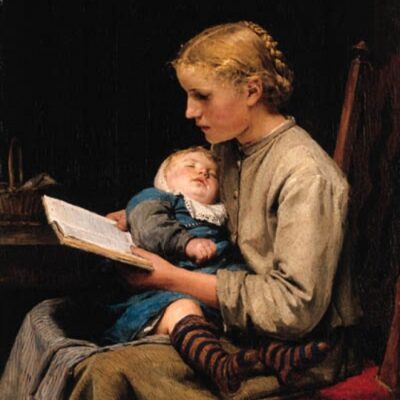
Bullied in school and looked down on because of her lack of English, Wang lives in constant fear that her status as an undocumented immigrant will be discovered. She internalizes the mantra her parents instill in her from a very early age: keep your head down, don’t ask any questions, and don’t trust anyone. She finds refuge in books: the characters become her friends, and through the stories she reads, she allows herself to dream of a better life.
I read Beautiful Country, but many recommend listening to it as an audiobook. Either way, Qian Julie Wang will open your eyes to the world of undocumented immigrants, what they give up when they come to America, and the anxiety and paranoia they face every single day. The dedication to the author’s mother in the Acknowledgements says it all: “When you had nothing, you somehow managed to give me everything.”
Check Amazon for more on this book I love.
 |  |
Trigger Warning: Trauma, Racism, Bullying, Abuse, Animal Abuse